1. Wi-Fi® jest zarejestrowanym znakiem towarowym będącym własnością organizacji Wi-Fi Alliance®.
2. Wi-Fi® is a registered trademark of Wi-Fi Alliance®.
Pipette Calibration
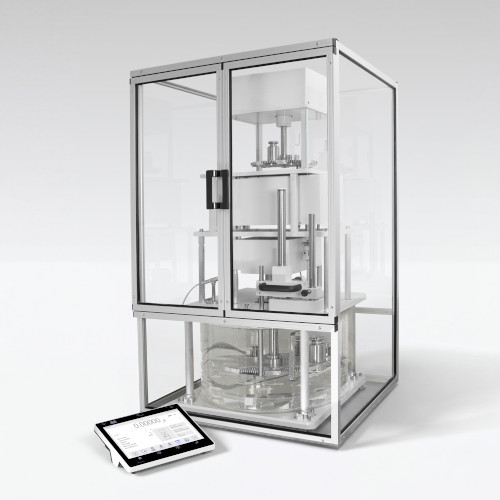
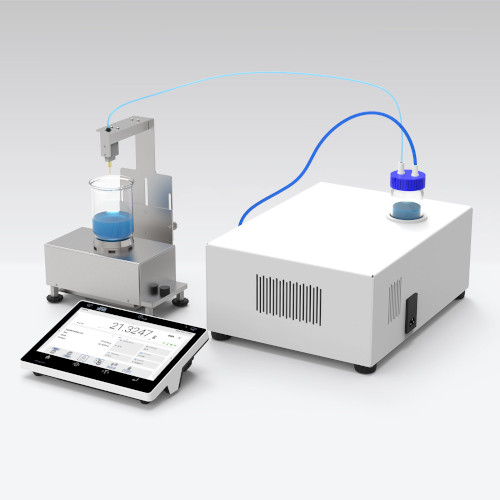
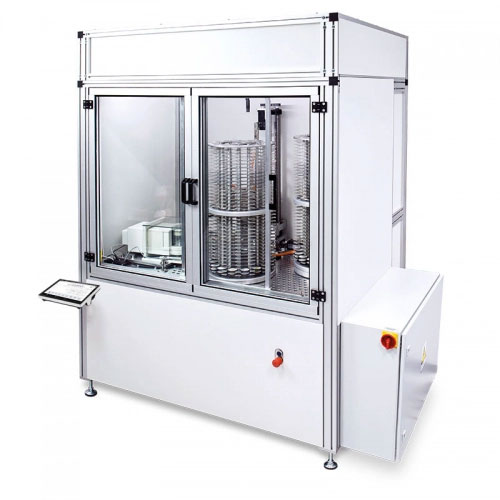
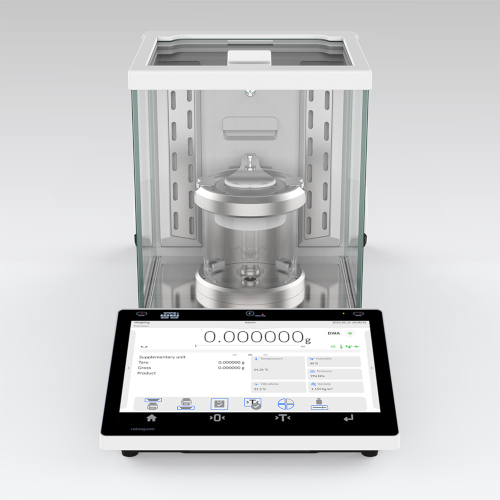
Pipette calibration with RADWAG equipment lets you check the accuracy and precision of piston pipettes in your own laboratory, in line with ISO 8655. The range includes automatic devices for multichannel pipettes, balances for manual calibration with a readability from 1 µg to 0.1 mg, complete calibration workstations, R-Pipettes software and accessories that limit evaporation and stabilize the measurement. RADWAG pipette calibration solutions are designed and manufactured in Poland.
How does pipette calibration work?
Piston pipettes are most often calibrated with the gravimetric method described in ISO 8655. The pipette dispenses distilled water into a weighing vessel on a balance, and the mass of each dose is converted into volume using the Z factor, which takes into account water density and air buoyancy at the measured temperature and pressure. From a series of measurements, the systematic error (accuracy) and the random error (precision) of the pipette are calculated and compared with the permissible limits. Because 1 µl of water weighs about 1 mg, small volumes require balances with very high resolution, protection against evaporation and stable ambient conditions.
Pipette calibration solutions
| Solution | Readability [d] | Max capacity [Max] | Application |
|---|
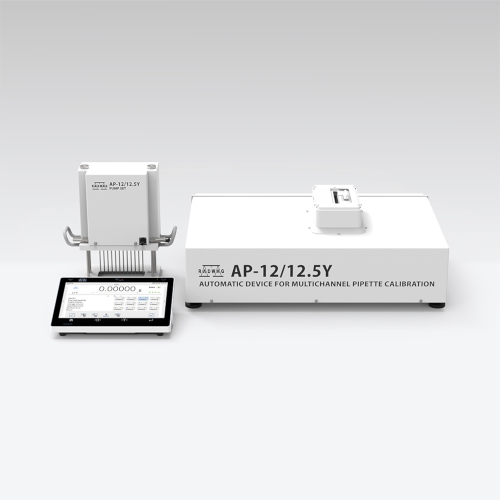
| Automatic devices for pipette calibration (AP-12 series) | 1 µg – 0.01 mg | 18 g – 52 g | simultaneous calibration of all channels of 12-channel pipettes; a typical ISO 8655 test of a 12-channel fixed-volume pipette takes about 5 minutes |
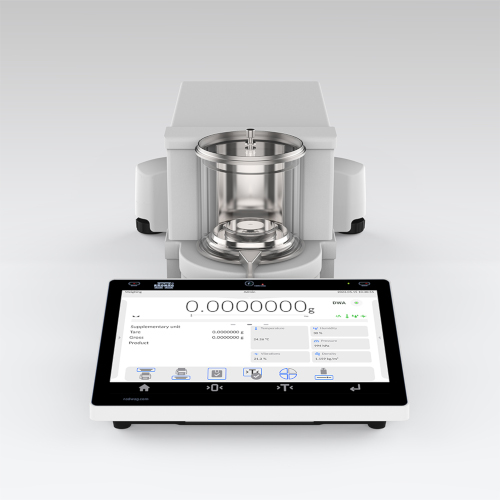
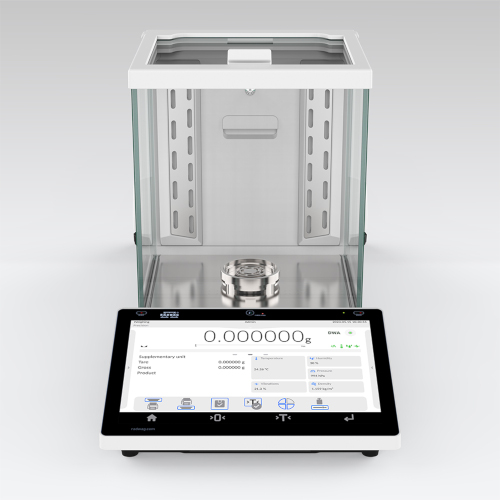
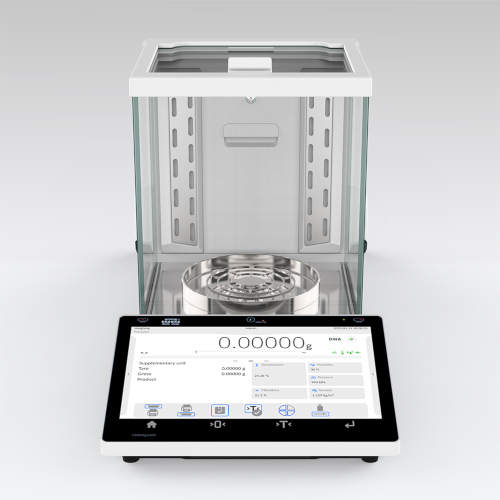
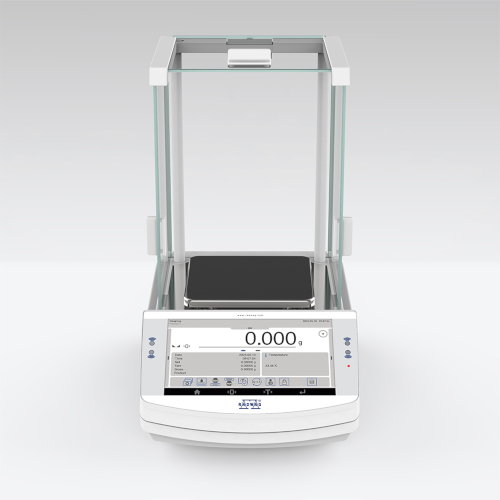
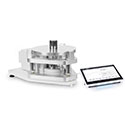
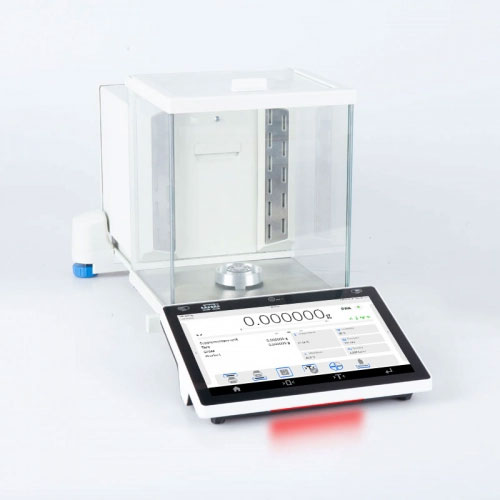
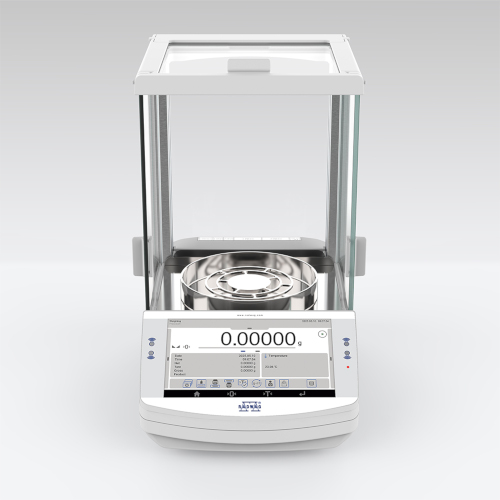
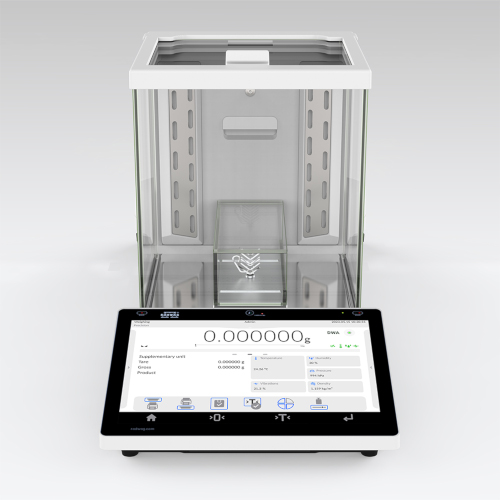
| Manual balances for pipette calibration | 1 µg – 0.1 mg | 6 g – 250 g | calibration of single-channel pipettes on MYA 5Y.P and XA 5Y.M.A.P microbalances or XA 5Y.A analytical balances |
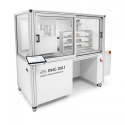
| Workstations for pipette calibration (SDKP, SDKP DUAL) | depending on the balance | depending on the balance | complete ergonomic station with an anti-vibration table, probes for air temperature, humidity, pressure and water temperature, and a PC with software |
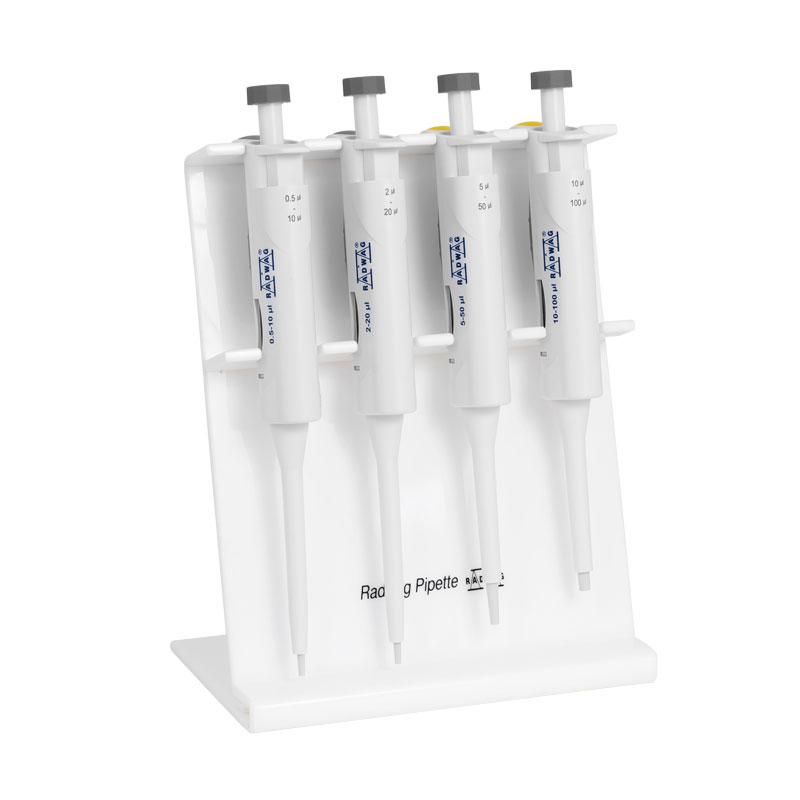
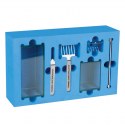
Accessories include adapters for pipette calibration, pipette tips, suction pumps for liquids, automatic variable-volume pipettes, anti-vibration tables, balance storage cases and R-Pipettes software.
Who needs pipette calibration?
- accredited calibration laboratories and pipette service centres,
- quality control laboratories in the pharmaceutical, biotechnology and food industries,
- clinical, diagnostic and research laboratories working according to ISO 15189, ISO/IEC 17025 or GLP,
- pipette manufacturers and distributors.
What an ISO 8655 compliant calibration station needs
- Balance with suitable readability – ISO 8655 links the required readability to the nominal volume of the pipette. The smallest volumes require microbalances with a readability of 1 µg, while larger volumes can be calibrated on analytical balances.
- Protection against evaporation – dedicated adapters limit the loss of water during measurement, which is critical for volumes of a few microlitres.
- Measurement of ambient conditions – air temperature, humidity and pressure as well as water temperature are needed to calculate the Z factor. SDKP workstations include the required probes.
- Stable base – an anti-vibration table isolates the balance from vibrations of the building and the operator.
- Software – R-Pipettes calculates pipette errors according to ISO 8655 for single-channel fixed and adjustable volume pipettes and includes a database of pipette models.
- Automation for multichannel pipettes – AP-12 devices measure all channels at once, which shortens calibration time and eliminates channel-by-channel weighing.
How to choose equipment for pipette calibration?
- Pipette type – for single-channel pipettes, choose a manual balance or a workstation; for 12-channel pipettes, an AP-12 automatic device.
- Volume range – the smallest nominal volume you calibrate determines the required readability of the balance.
- Number of pipettes – laboratories that calibrate many pipettes benefit most from a complete workstation or an automatic device.
- Ambient conditions – calibrate in a room with stable temperature and humidity, without air drafts, and record the conditions for each measurement.
- Traceability – check the balance regularly with mass standards and keep its calibration certificate up to date.
FAQ – pipette calibration
Which standard applies to pipette calibration?
Pipette calibration is carried out according to ISO 8655 for piston-operated volumetric apparatus. Part 6 of the standard describes the gravimetric method, in which the volume of dispensed water is determined by weighing.
What balance do I need to calibrate pipettes?
It depends on the smallest nominal volume. The smaller the volume, the smaller the readability required. Microbalances with a readability of 1 µg are used for the smallest volumes, and analytical balances with 0.01 mg or 0.1 mg for larger ones. RADWAG offers balances for pipette calibration with a readability from 1 µg to 0.1 mg.
How often should pipettes be calibrated?
It depends on how often the pipette is used, the liquids dispensed and the requirements of your quality system. Typically, pipettes are calibrated every 3 to 12 months, with routine checks in between.
How can multichannel pipettes be calibrated faster?
The AP-12 automatic device measures all 12 channels at the same time. A typical ISO 8655 test of a 12-channel pipette takes about 5 minutes for a fixed-volume pipette and about 15 minutes for a variable-volume pipette.
Why is evaporation important in pipette calibration?
When small volumes are weighed, even slight evaporation of water reduces the measured mass and makes the pipette appear inaccurate. Evaporation protection, stable humidity and a quick measurement procedure reduce this error.
What is the Z factor?
The Z factor converts the mass of water into volume. It depends on water temperature and air pressure and takes into account water density and air buoyancy. Its values are given in ISO 8655.
Not sure which pipette calibration solution fits your laboratory? Contact our specialists for help with selection, installation and calibration.









 AS X7 Analytical Balances
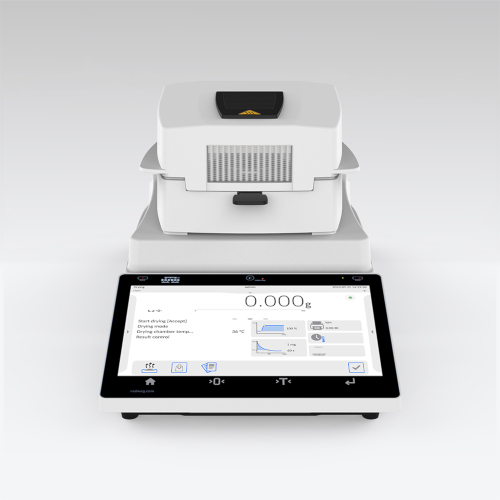 Moisture Analyzers
 PGC Scales
 Checkweighers
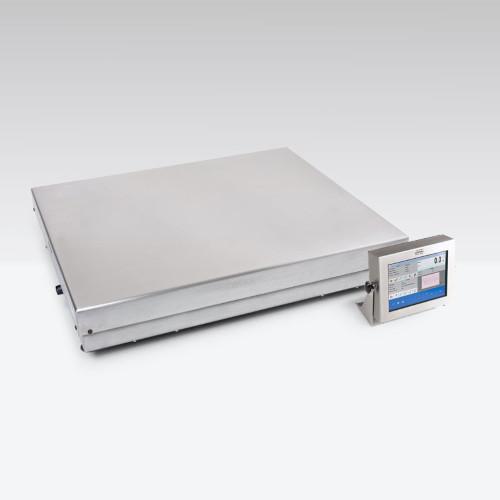 HRP High Resolution Scales
 Hazardous Area Endangered with Gas Explosion
 Hazardous Area Endangered with Gas and Dust Explosion
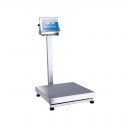 H315 H Waterproof Platform Scales
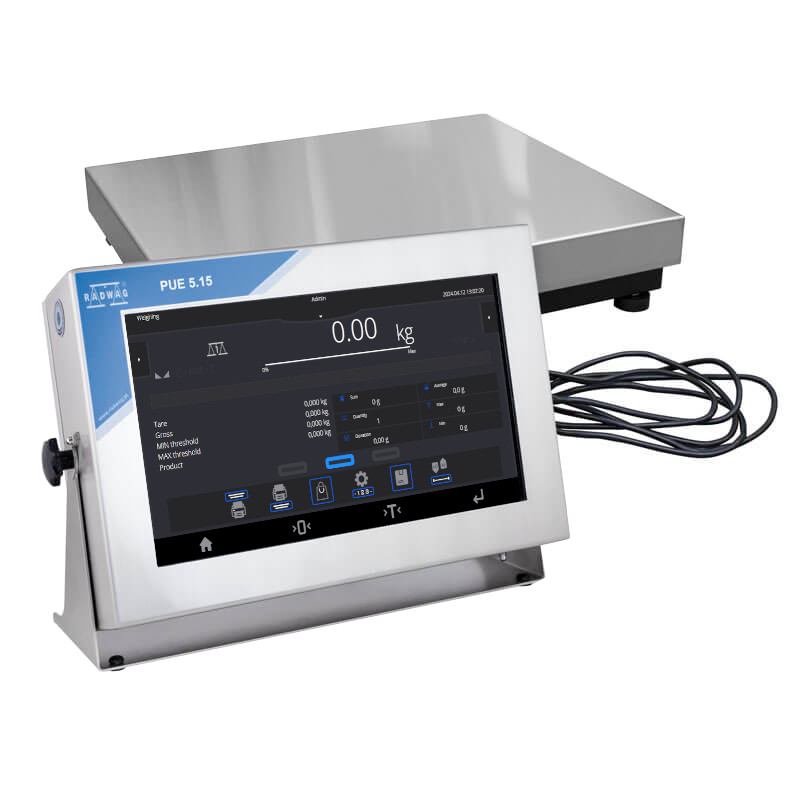




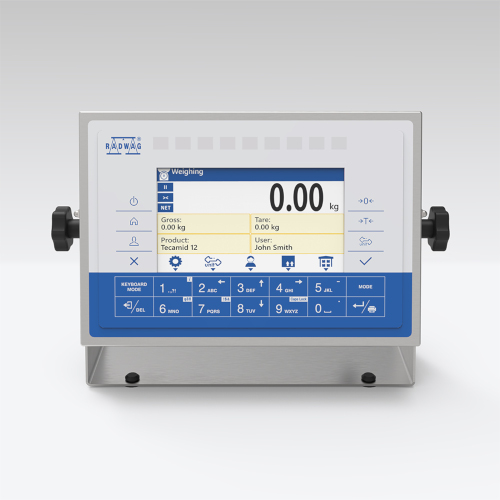
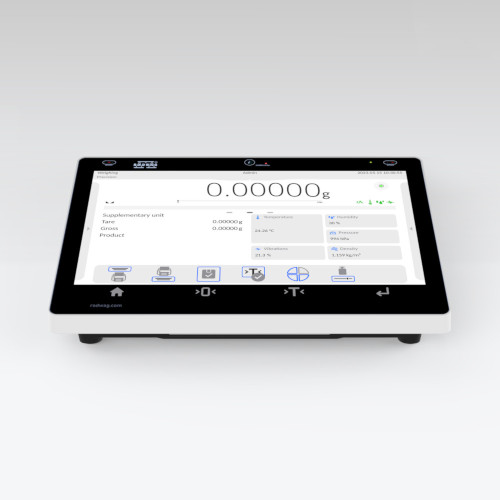 5Y Terminal
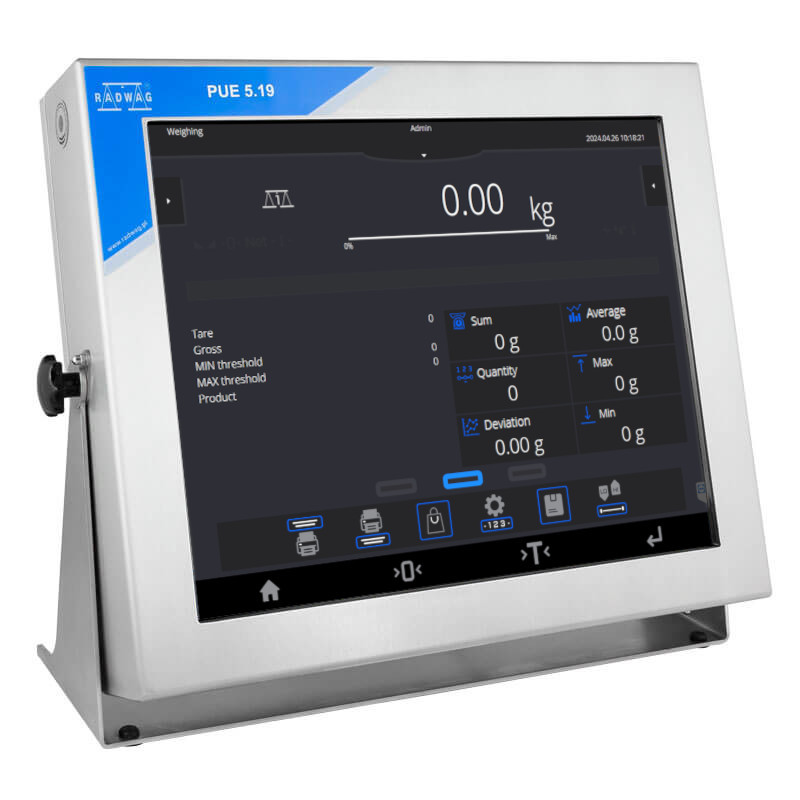
 PUE CY10 Weighing Terminal
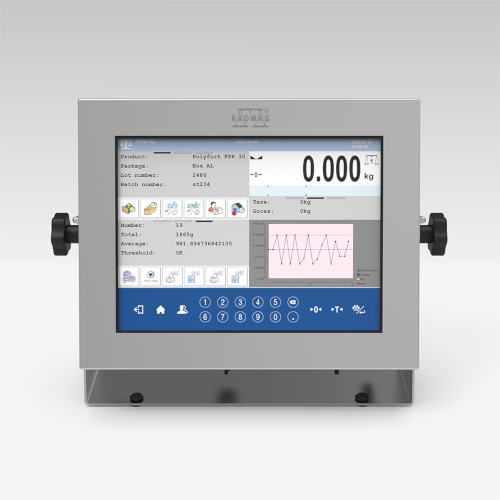
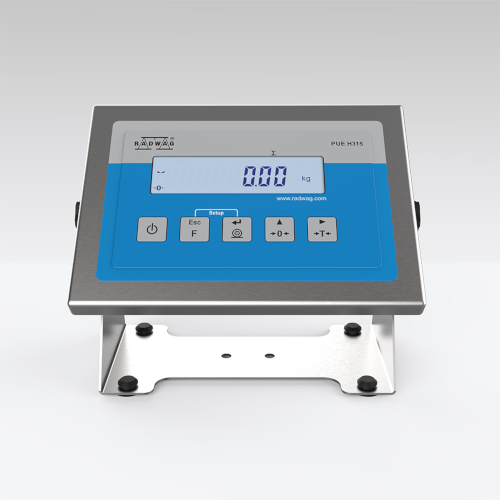 PUE H315 Weighing Terminal
 PUE C315 Weighing Terminal
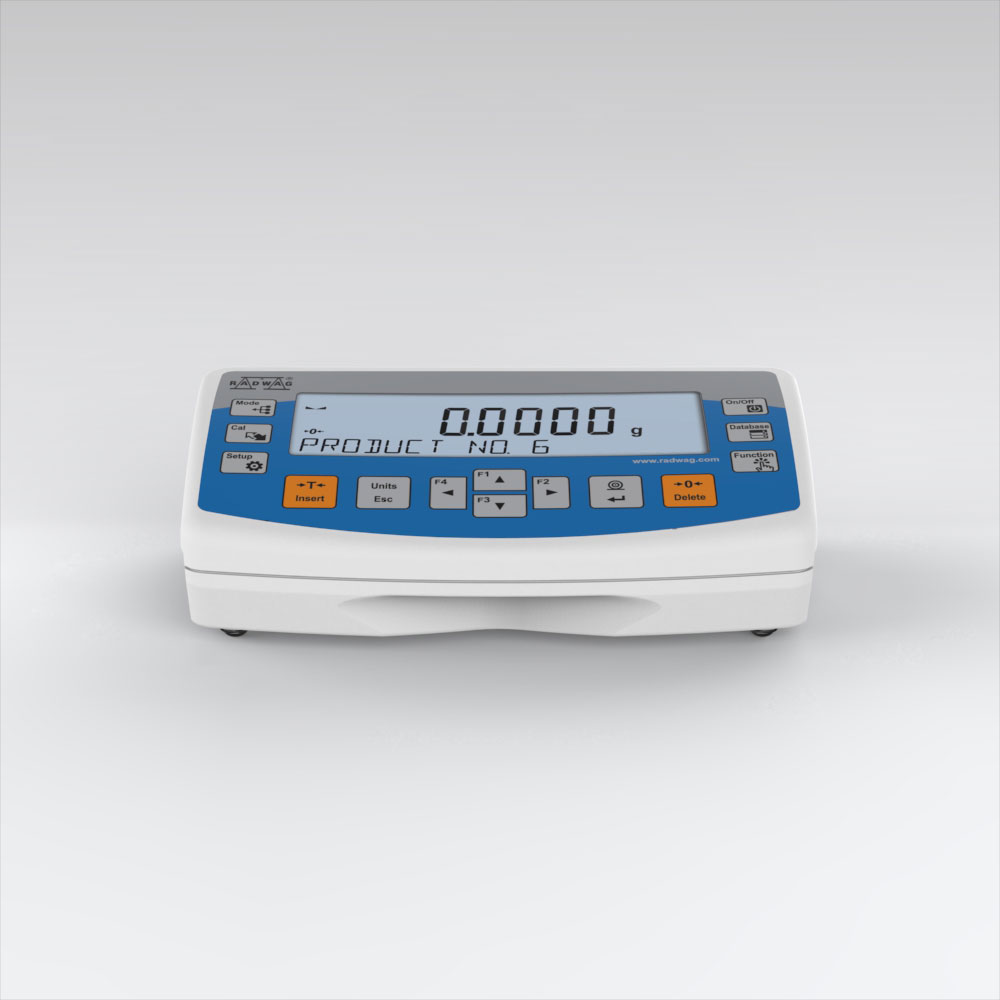 R Terminal (WDM-8)


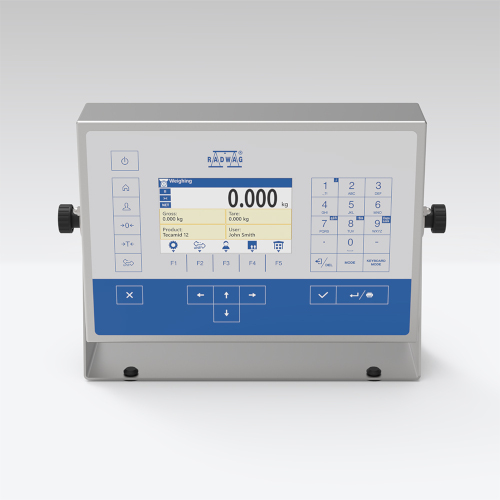















 Albanian
 Danish
 Nederlandse
 Estonian
 Finnish
 Hungarian
 Icelandic
 Kazakh
 Latvian
 Lithuanian
 Macedonian
 Norwegian
 Portuguese
 Romanian
 Russian
 Slovak
 Slovenian
 Swedish
 Ukrainian
 Serbian
 Montenegrin
 Português (Brasil)
 Deutsch
 Español
 Français
 Italiano
 Japanese (日本語)
 Polski
 Türkiye
 Česky
 中文


