1. Wi-Fi® jest zarejestrowanym znakiem towarowym będącym własnością organizacji Wi-Fi Alliance®.
2. Wi-Fi® is a registered trademark of Wi-Fi Alliance®.
Checkweighers
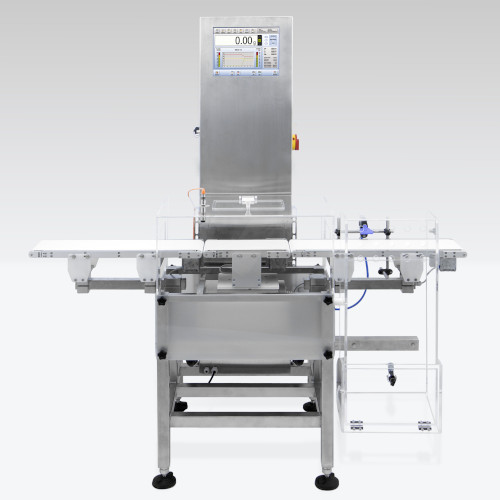
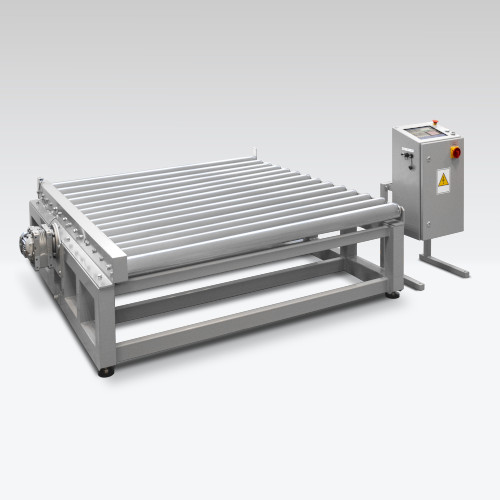
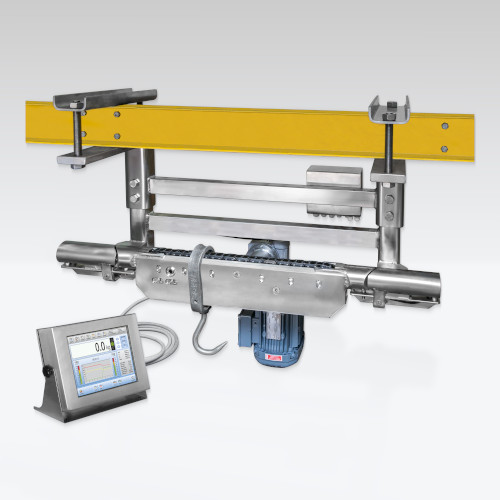
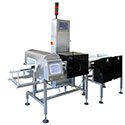
Checkweighers from RADWAG are automatic weighing systems that check the mass of every product on a production or packaging line and reject items outside the set tolerance. They help you prevent underfilled packages, reduce costly overfilling, meet the requirements for pre-packaged goods and keep full documentation of the weighing process. The range includes inline checkweighers for products from 300 g up to 60 kg, models with an integrated metal detector, hermetic versions for washdown areas, sorting and labelling checkweighers, as well as roller and overhead track checkweighers for loads up to 6000 kg.
How does a checkweigher work?
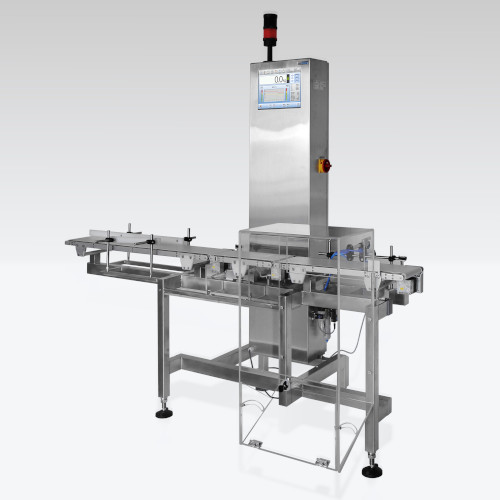
A checkweigher is a dynamic scale installed in a conveyor line. Each product is fed onto the weighing conveyor, weighed in motion and compared with the set limits. Depending on the result, the product is accepted, removed from the line by a rejection system or directed to the right weight class. All results are stored and can be sent to a computer system for statistics, reports and production control.
Types of checkweighers
| Checkweigher type | Max capacity | Readability [d] | Typical applications |
|---|
| Control scales | 750 g – 60 kg | 0.1 g – 20 g | weight control of packed food, cosmetics, chemicals and industrial goods, in precise, heavy-load and multi-track versions |
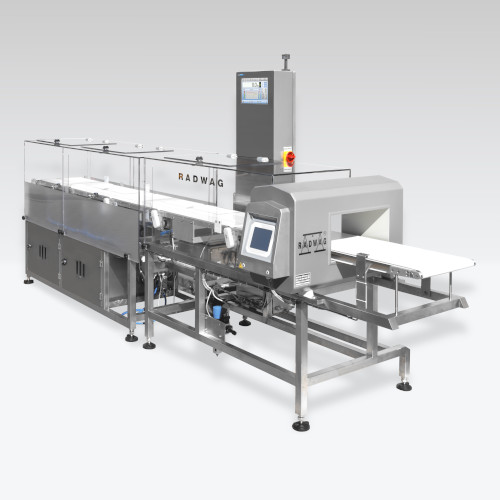
| Checkweighers with metal detector | 750 g – 60 kg | 0.1 g – 20 g | weight control and metal detection in one machine, with separate rejection of incorrect weight and contaminated products |
| Hermetic checkweighers | 1.5 kg – 60 kg | 1 g – 20 g | wet and washdown areas in meat, fish, dairy and ready meal production |
| Rotational checkweighers | 300 g – 6 kg | 0.2 g – 2 g | cylindrical products such as aerosols, sprays and glass or plastic bottles |
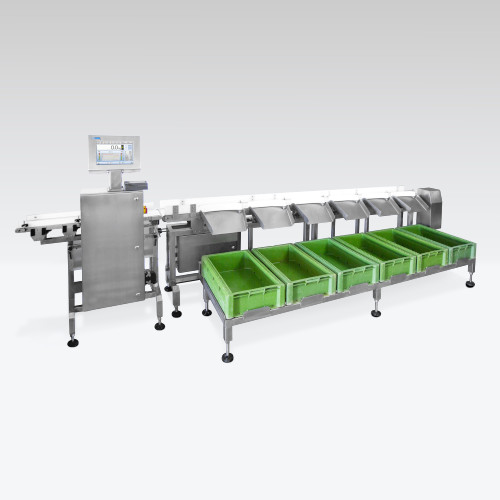
| Sorting checkweighers | 1.5 kg – 6 kg | 0.5 g – 2 g | sorting products into weight classes, for example meat, poultry or fish portions |
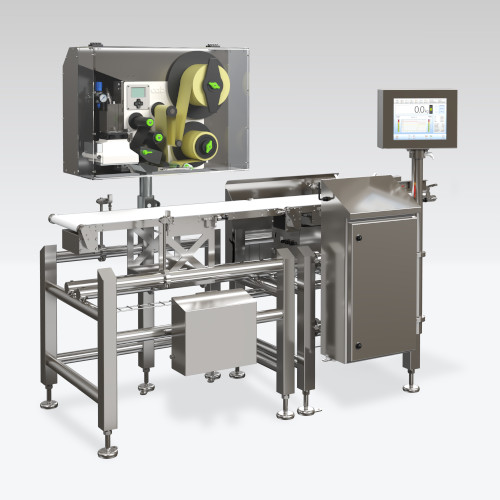
| Labelling checkweighers | 3 kg – 7.5 kg | 1 g – 5 g | weighing and price labelling of variable weight products |
| Roller checkweighers | 6000 kg | 2 kg | end-of-line control of pallets and crates before storage or shipping |
| Overhead track checkweighers | 300 kg – 600 kg | 200 g | dynamic weighing of carcasses on overhead tracks in slaughterhouses |
Benefits of using checkweighers
- 100% weight control – every product is checked, not only random samples.
- Less product giveaway – accurate data on filling deviations helps you reduce overfilling and save raw materials.
- Legal compliance – support for pre-packaged goods control according to the average quantity system (e-mark) and legal metrology requirements.
- Product safety – combined with metal detection, a checkweigher protects consumers and your brand against contaminated products.
- Full traceability – results, statistics and reports are stored and can be exported to production management and ERP systems.
- Higher line efficiency – automatic rejection and sorting replace manual checks and keep the line running.
Checkweighers for your industry
- Food and beverage – weight control of packed meat, dairy, bakery, confectionery and frozen products. For daily wet cleaning, choose hermetic stainless steel checkweighers.
- Meat, poultry and fish – sorting into weight classes, price labelling of variable weight packs and dynamic weighing on overhead tracks.
- Pharmaceutical and cosmetics – checking pack completeness, for example a missing leaflet or item, with full data traceability. See also pharma and biotech solutions.
- Chemical industry – control of aerosols, bottles and canisters on filling lines.
- Logistics and distribution – weight control of pallets, crates and shipments before dispatch.
How to choose a checkweigher?
- Product weight and tolerance – the maximum capacity should cover your heaviest product, and the readability should be small compared with the allowed tolerance.
- Product size and packaging – conveyor width and length must match the product. Cylindrical products need a rotational checkweigher, and pallets or crates a roller checkweigher.
- Line speed – check the required throughput in products per minute, as it depends on product length and conveyor speed.
- Working environment – for wet areas, choose stainless steel models with a high ingress protection rating, up to IP69K for high pressure washdown in selected models.
- Contamination risk – choose a checkweigher with an integrated metal detector or combine it with a standalone metal detector.
- Rejection and sorting – define how many reject paths or weight classes you need, for example separate bins for underweight, overweight and contaminated products.
- Legal requirements – if the checkweigher is used for pre-packaged goods control or to determine the price, choose a verified version.
- Integration – depending on the model: RS232, USB, Ethernet, Profibus and control outputs for communication with the line and IT systems.
Software and integration
RADWAG checkweighers can work as part of the E2R System, which collects results from many weighing stations, creates statistics and reports and supports pre-packaged goods control. Labels for labelling checkweighers are designed in Label Editor R02. For statistical control of packages at manual stations, see PGC scales, and for static weighing of heavy loads, see industrial scales.
FAQ – checkweighers
What is a checkweigher?
A checkweigher is an automatic scale installed in a production or packaging line that weighs every product in motion, compares the result with set limits and rejects or sorts products outside the tolerance.
What is the difference between a checkweigher and a static scale?
On a static scale, the operator places the product on the platform and waits for a stable result. A checkweigher weighs products automatically while they move on a conveyor, makes a decision for each item and rejects incorrect products without stopping the line.
Can a checkweigher detect metal contamination?
Yes. RADWAG offers checkweighers with an integrated metal detector that check weight and contamination in one pass and use separate rejection for incorrect weight and for contaminated products.
Does a checkweigher need to be verified?
A verified checkweigher is required when it is used for legal control of pre-packaged goods or to determine the price of products. In the European Union, automatic weighing instruments are covered by the Measuring Instruments Directive 2014/32/EU. RADWAG checkweighers are available in verified versions.
How fast is a checkweigher?
Throughput depends on the model, product size and conveyor speed. For example, the DWM HPE labelling checkweigher handles up to 60 products per minute and the DWR rotational checkweigher up to 80 products per minute.
Which checkweigher is suitable for washdown areas?
For areas cleaned with water, choose hermetic checkweighers or stainless steel models with a high ingress protection rating, which are available up to IP69K in selected versions.
Not sure which checkweigher fits your line? Contact our specialists and we will help you select the right model, conveyor and rejection system.









 AS X7 Analytical Balances
 Moisture Analyzers
 PGC Scales
 Checkweighers
 HRP High Resolution Scales
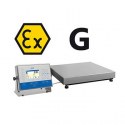 Hazardous Area Endangered with Gas Explosion
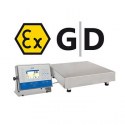 Hazardous Area Endangered with Gas and Dust Explosion
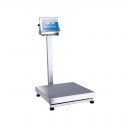 H315 H Waterproof Platform Scales
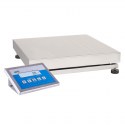


 5Y Terminal
 PUE CY10 Weighing Terminal
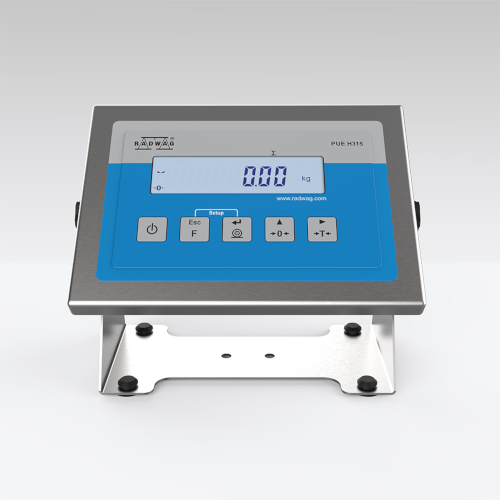 PUE H315 Weighing Terminal
 PUE C315 Weighing Terminal
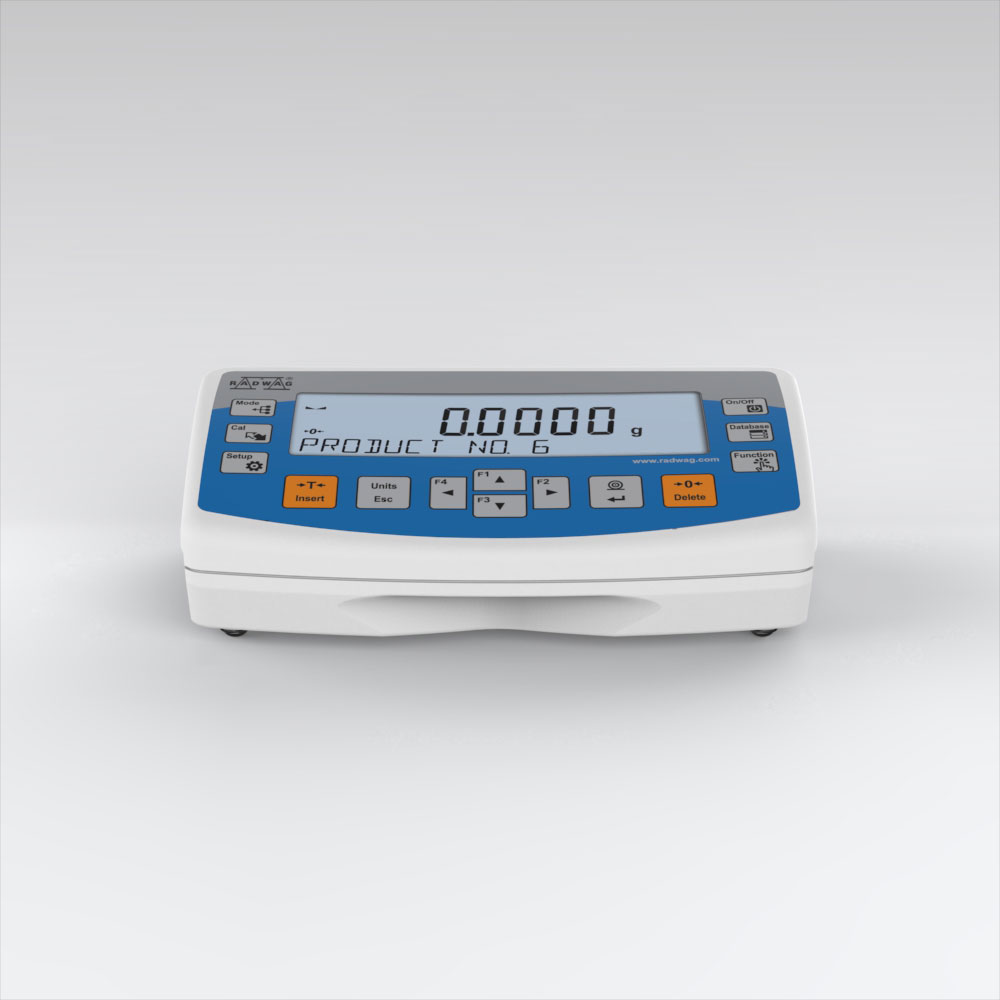 R Terminal (WDM-8)








 Albanian
 Danish
 Nederlandse
 Estonian
 Finnish
 Hungarian
 Icelandic
 Kazakh
 Latvian
 Lithuanian
 Macedonian
 Norwegian
 Portuguese
 Romanian
 Russian
 Slovak
 Slovenian
 Swedish
 Ukrainian
 Serbian
 Montenegrin
 Português (Brasil)
 Deutsch
 Español
 Français
 Italiano
 Japanese (日本語)
 Polski
 Türkiye
 Česky
 中文


