Wägeterminal PUE HY10

Radwag Waagen kaufen – Präzisionswaagen für Industrie & Labor in Deutschland
Selected language Deutsch
Wägeterminal
Übersichtsbild

Wägeterminal PUE HY10

Produktcode: WX-008-0027
Modell ändern (2)
close
Modelle auswählen:
Wägeterminal PUE HY10
Wägeterminal PUE HY10/P (panel)
Select all
Details anzeigen
Download
Beschreibung

Wägeterminal PUE HY10

 
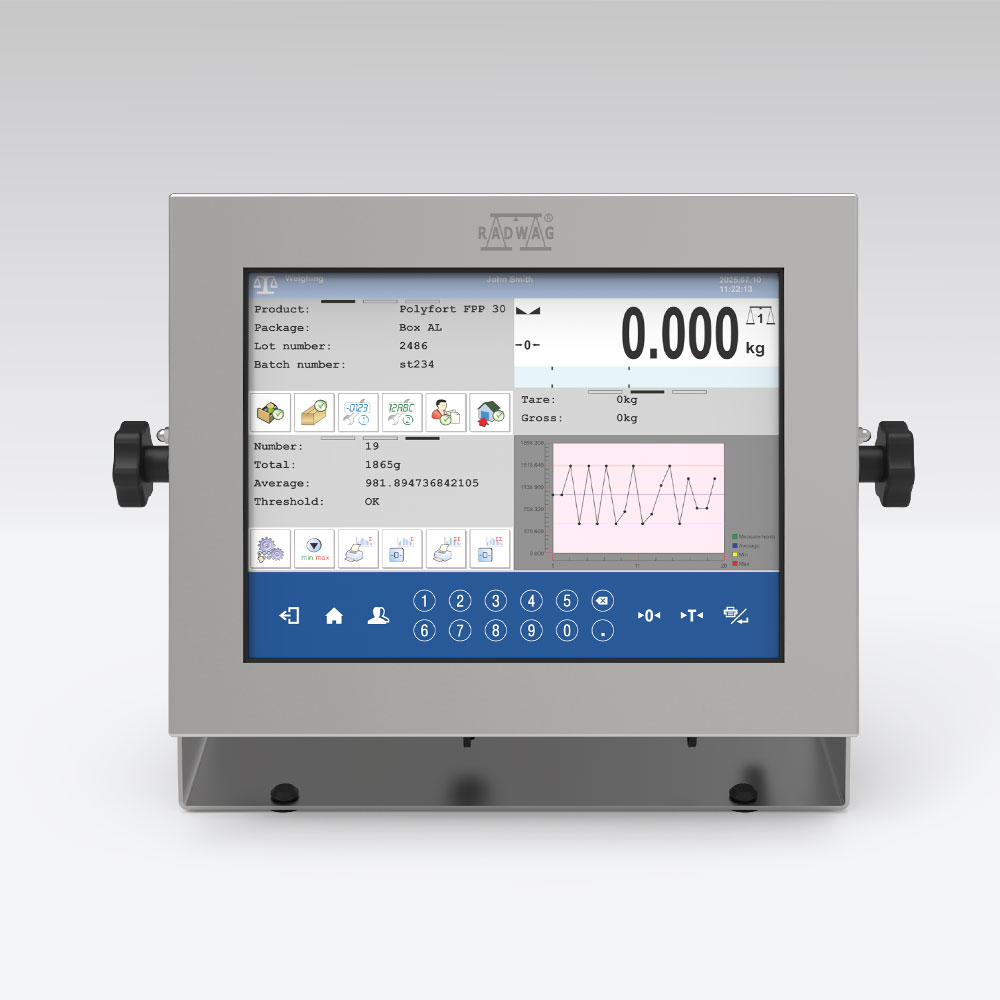
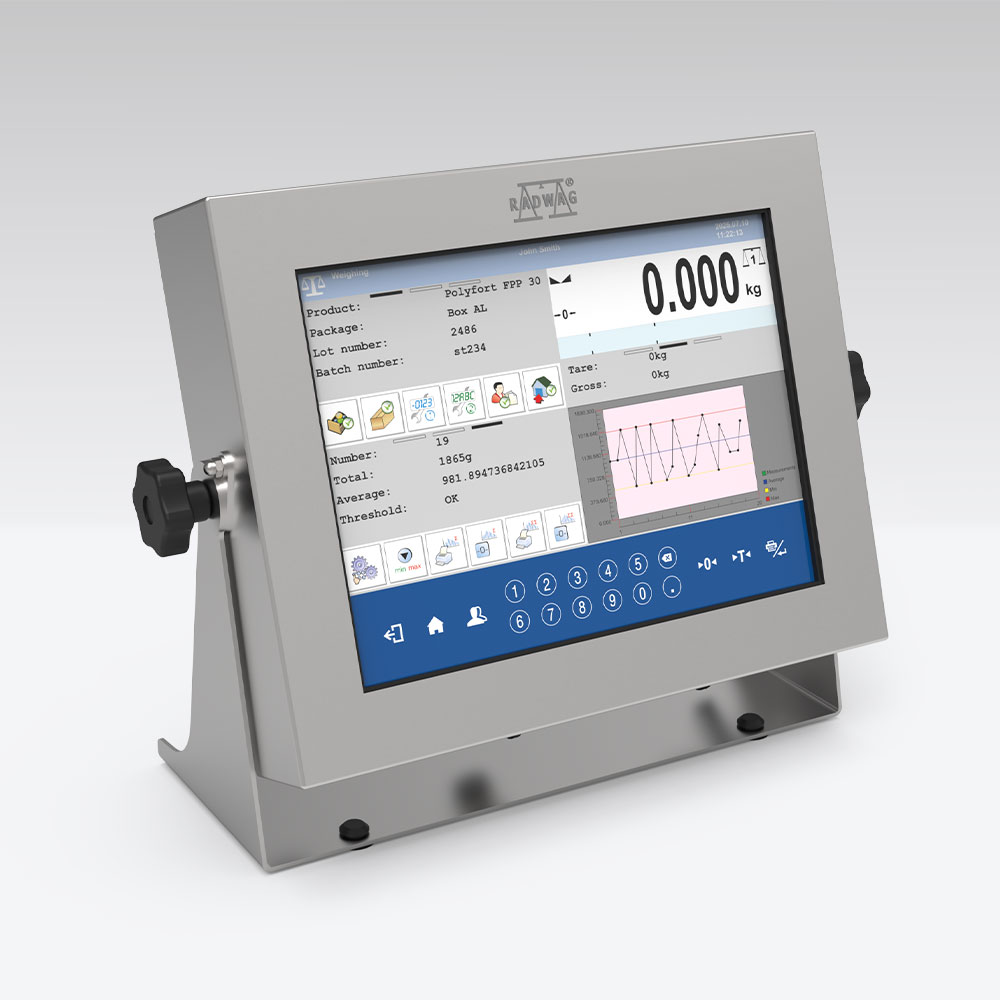
Wägeterminal PUE HY10 ist ein hochentwickeltes Gerät für vielseitige Anwendungen. Es vereint die Funktion eines Wägemoduls für ein- und mehrsensorige Dehnungsmessstreifen-Wägeplattformen mit der eines leistungsfähigen Terminals zur Erfassung, Analyse und Verarbeitung von Gewichtsdaten. 


Messwerte

können sowohl über den integrierten A/D-Wandler als auch von hochauflösenden HRP-Plattformen oder externen Waagen erfasst werden. Durch die Vielzahl verfügbarer Schnittstellen und die Kompatibilität mit zahlreichen Plattformtypen eignet sich das Terminal ideal als zentrale Komponente in Industrie- und Prozesswaagen.


Robuste Konstruktion

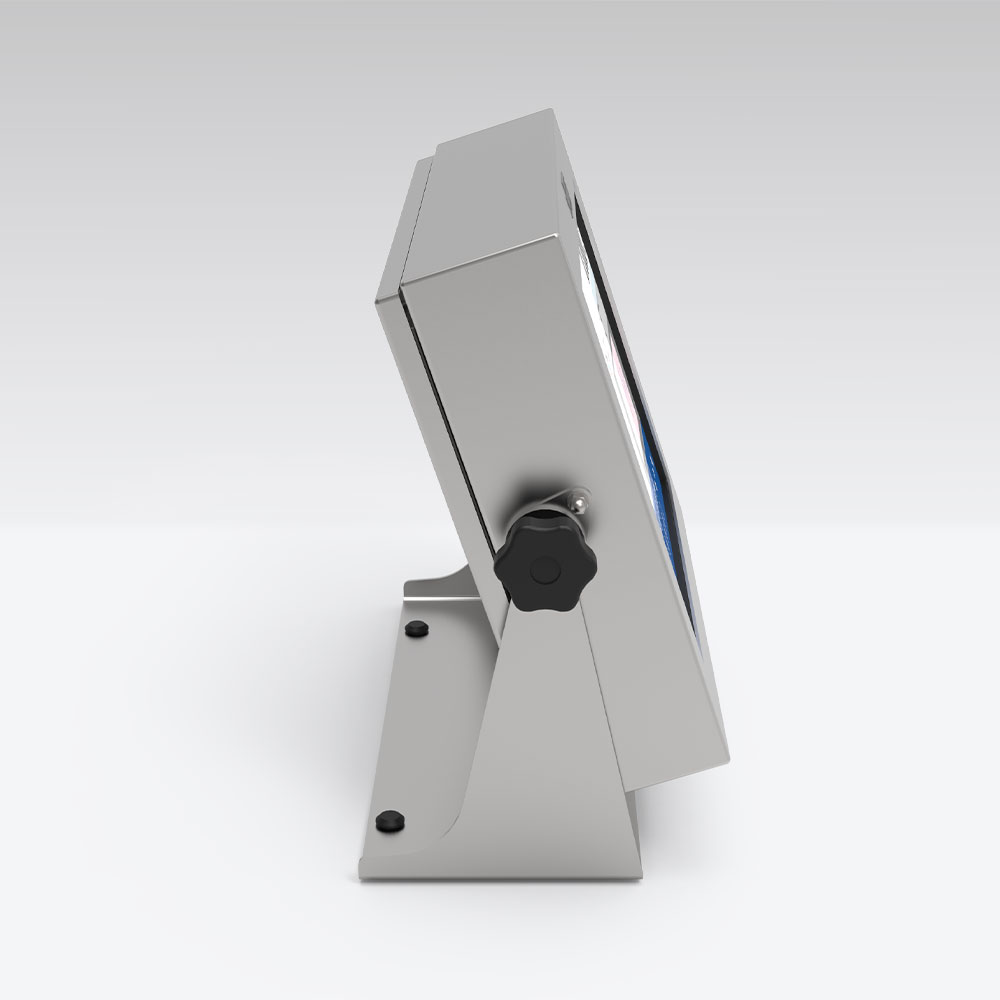
Das Gehäuse aus Edelstahl AISI 304 mit Schutzklassen IP66/67/69 gewährleistet zuverlässigen Betrieb auch unter schwierigen Bedingungen wie hoher Feuchtigkeit und Staub. Damit erfüllt das Terminal zudem alle Hygieneanforderungen der Lebensmittel- und Pharmaindustrie.
 
Auf der Vorderseite befindet sich ein 10,1"-Farbdisplay mit einer Auflösung von 1024×600 Pixeln. Das kapazitive Touchpanel sowie zusätzliche Funktions- und Zifferntasten sorgen für eine intuitive und komfortable Bedienung mit klar strukturierter Menüführung.


Flexible Unterstützung mehrerer Wägeplattformen

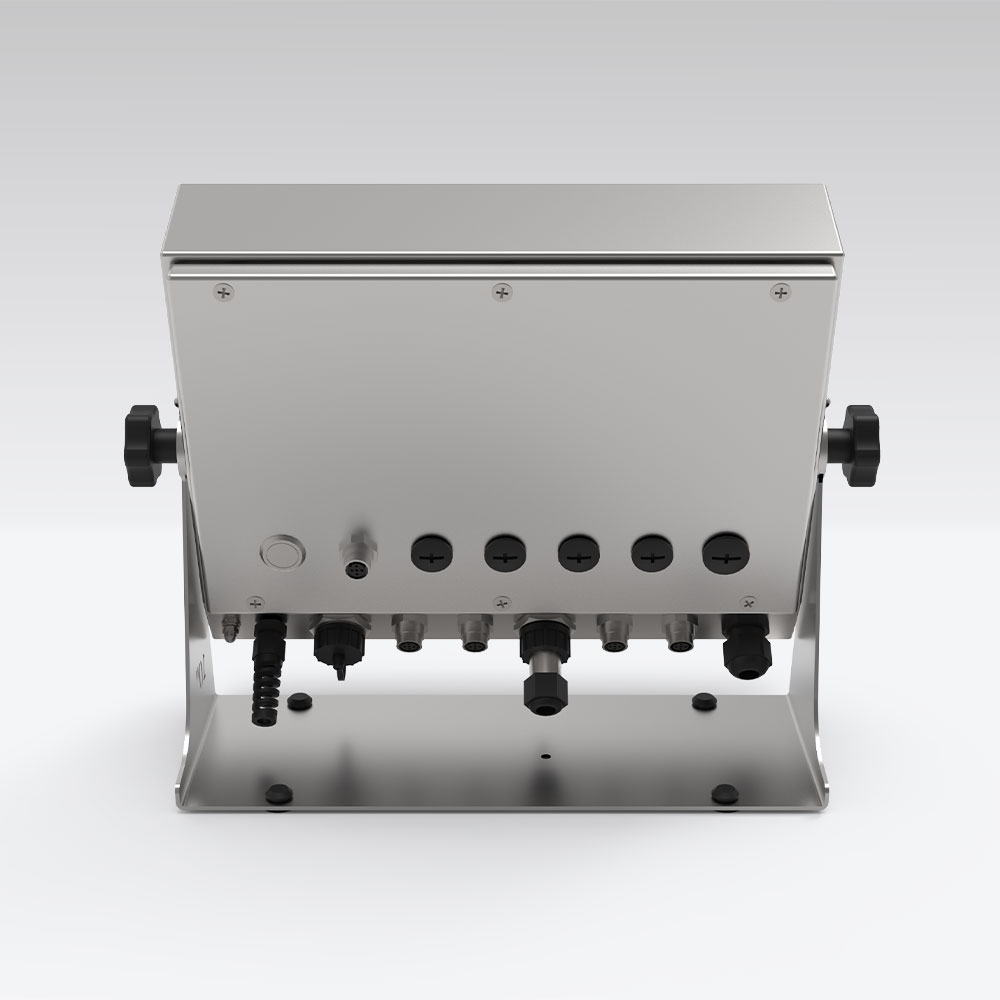
Auf der Rückseite befinden sich hermetisch abgedichtete Anschlüsse für alle Kommunikationsschnittstellen. Eine stabile Halterung erlaubt sowohl die Tischaufstellung als auch die Wandmontage mit individuell einstellbarem Neigungswinkel.
 
In der Grundversion unterstützt das Terminal eine analoge Dehnungsmessstreifen-Plattform. Durch das Zusatzmodul DP-6 kann die Anzahl auf zwei Plattformen erweitert werden. Insgesamt lassen sich bis zu vier Plattformen anschließen – darunter hochauflösende HRP-Plattformen, Wägemodule oder externe Waagen über RS232 bzw. TCP/IP.


Multifunktionale Software

Die erweiterte Software des PUE HY10 ermöglicht die Durchführung komplexer Wägeprozesse wie Stückzählung, Dosierung, Etikettierung, Rezepturverwaltung, Fahrzeugwaagen, Toleranzkontrolle sowie SQC- und FPVO-Funktionen.
 
Das integrierte Informationssystem basiert auf MySQL-Datenbanken (u. a. für Benutzer, Produkte, Wägungen, Verpackungen, Rezepturen, Kunden, Etiketten, Dosierprozesse und Berichte) und bietet umfangreiche Möglichkeiten zur Datenerfassung, Verarbeitung und Weitergabe – auch bei intensiver Nutzung. Damit eignet sich das Terminal ideal für Anwendungen in der Produktions- und Prozessdatenerfassung. 


Die Software unterstützt die Anbindung verschiedener Peripheriegeräte, wie Etikettendrucker, Barcodescanner, RFID-Leser, Signal-Säulen sowie externe Steuerungstasten. Der anpassbare Arbeitsbereich des Displays erlaubt es dem Benutzer, die Anordnung von Informationen, Diagrammen, Tasten und Grafiken zu personalisieren und die Benutzeroberfläche so optimal an individuelle Bedürfnisse und Prozessanforderungen anzupassen.


Kommunikationsschnittstellen

Standardmäßig verfügt das Terminal über RS232, USB, Ethernet sowie digitale Ein- und Ausgänge und unterstützt die Protokolle CBCP-03 und Modbus TCP/IP. Optional kann das System um RS485, analoge Ausgänge (4–20 mA, 0–20 mA, 0–10 V), zusätzliche 12 Ein-/Ausgänge, Wi-Fi® sowie Unterstützung für die Protokolle PROFIBUS, PROFINET und Ethernet/IP erweitert werden. Dadurch ist eine nahtlose Integration in externe Geräte, Automatisierungs- und Steuerungssysteme sowie übergeordnete IT-Strukturen gewährleistet.


Wi-Fi® ist eine eingetragene Marke der Wi-Fi Alliance®.
Technische Daten
OIML-Klasse

II oder III

Max. Anzahl der Eichwerte

6000 e

Min. Spannung auf Eichwert

0,4 µV

Max. Spannung auf Eichwert

3,25 µV

Min. Impedanz der DMS-Zellen

50 Ω

Max. Impedanz der DMS-Zellen

1200 Ω

Versorgungsspannung DMS-Zelle

5V DC

Max. Signalzunahme

19,5 mV

Verbindung DMS-Zellen

4 oder 6 Kabel + Abschirmung

Display

10,1″ grafisch farbiger Touchscreen

Abmessungen des Geräts B x T x H

357×275×120

mm

Verpackungsgröße B x T x H

420×350×230

mm

Nettogewicht

5,7

kg

Bruttogewicht

6,5

kg

Schutzart

IP 66 / 67 / 69

Touchscreen

kapazitiv

Tastatur

Touchscreen-Panel

Gehäuse

Edelstahl

Schnittstellen

2×RS232, 2×USB-A, Ethernet, 4 IN / 4 OUT (Digitalausgang)

Optionale Schnittstellen

Modul Wi-Fi® 802.11 b/g/n, Modul Profibus (DP SLAVE), Modul RS485, Modul PROFINET (RJ45), Analogausgangsmodul (4-20mA, 0-20mA, 0-10V) , 12IN / 12OUT (IN – 5-24 VDC, OUT – max 30 VDC, 0,5 ADC)

Umgebungstemperatur

-10 – +40

°C

Relative Luftfeuchtigkeit

10% – 85% RH ohne Kondensation

Betriebssystem

Linux

Prozessor

quad-core 64-bit Cortex-A53 1,2 GHz

Speicher

RAM 1GB LPDDR2

Datenspeicher

16 GB (micro SD)

Max. Anzahl der Plattformen

4

CE
Garantie 2 Jahre
Videos
Komplette Wägelösungen für die Pharmaindustrie
Hochauflösende Waagen von RADWAG
PUE HY10 Weighing Indicator
Funktionen
Dosing

Dosing

Weighing process for which reference mass has been determined together with tolerance for its determination. Dosing tolerance is given in [%] and it is calculated in relation to the reference value thus being a permissible deviation of this process. This solution is used for weighing powders, liquids and loose materials. Dosing function performance is often supported with bargraph - load indicator. For industrial scales it is possible to use a control systems of dosing process.
Labelling

Labelling

Marking products with the right symbols contributes to quick and reliable identification. The balance/scale usually transfers product mass or product quantity to the label printer. The transferred value is printed with the following information: bar code, pictogram, content, address etc. In laboratory the labelling is performed in a semi-automatic mode, for industry in an automatic one (dynamic scales).
Plus/Minus Control

Plus/Minus Control

Control of sample's mass carried out with reference to specified MIN and MAX thresholds. The weight is considered to be correct if it is comprised within threshold values. A graphic visualisation of weighing result is displayed in a form of a bar graph.
Percent Weighing

Percent Weighing

Percent Weighing function is used for comparision of measured products with mass standard. Mass of a mass standard may be a numeric value taken from a database or it may be determined through a measurement process. Each measured product is compared to mass standard, mass of which is presumed as a model 100% ideal mass. For products weighing less than the mass standard, obtained results are lower than 100%, for products weighing more, the obtained results are greatly  exceeded.
Totalizing

Totalizing

Function adding new mass value to already obtained one. This allows to determine mass content of the mixture, being a composition of number of different consistence components. Totalizing is limited by maximum capacity parameter.
Parts counting

Parts counting

Function using mass measurement for determination of  measured items quantity. Mass of a single item is required for this process. It may be either estimated through weighment or taken from a database. For items counting the following algorithm is used: all items mass / single item mass = quantity. Function operation is supperted by a mechanism of Automatic Correction of Accuracy. This allows to update single item mass in course of the process. To a certain extend Automatic Correction of Accuracy eliminates error which may be a result of different mass values of seemingly alike single elements. For industry solutions items counting may be simultaneously carried out with checkweighing and dosing thus industry solutions feature audio signalling base informing that specified number of items has been weighed. It is possible to apply weighing systems using few platfroms of different MAX capacities and different accuracies.
Peak hold

Peak hold

Function registering the greatest temporary indication occurring in course of the weighing process. It is most often used in medical scales in order to hold the measurement indication.
Formulation

Formulation

Function supporting the mixture making process, wherein the mixture contains various components. Formulation function usually uses the balance/scale database of components. Formulation serves for monitored checkweighing of every single component with a given tolerance. It is enriched with a set of individual settings.
Statistics

Statistics

Statistiscs function registers and analyses performed measurements. This supplies the user withthe following information: Max and Min standard deviation, average value, variance, range et.
Checkweighing

Checkweighing

Checkweighing function is used for checking whether the measured sample mass is within the predefined threshold values, Low [LO] and Hgh [HI]. The thresholds are given in [g] and [kg] units. Current state of a sample being measured is signalled by means of pictorgams located on a display for laboratory balances, for industrial scales Stackligt System is used. This visual +/- inspection is in operation during segregation, control or packing process of products for which mass has bees determined with a specifaied tolerance, eg. 12860 g ± 5 g
GLP Procedures

GLP Procedures

Diagnostic function allowing to objectively document performed measurements. GLP procedures may be either presented in a short report form or extended one.
Animal weighing

Animal weighing

Process of mass determination for a product which may unwillingly reposition within the weighing pan. Mass determination in such cases requires much longer period of time when compared to typical weighing process. It is the user who defines period of time needed for control of measured product mass. The user can thus optimize the function depending on the measured product characteristics.
Differential weighing

Differential weighing

Differential weighing informs about mass variation a particular sample, wherein the said variation is a result of manufacturing processes.

Differential weighing is often applied in product control process, for which reference product parameters have been specified in order to be used as a source of comparison for the whole series.
Insuchcasestandard deviation is the information which tells about quality and completeness of a final product. For systems based on a feed-back technique such information may be used by control units.
Replaceable unit

Replaceable unit

Weight function to change the weight unit.
Statistical Quality Control

Statistical Quality Control

Statistical control for determination of basic statistical criteria: maximum, minimum, standard deviation, mean values for each batch, etc.
ALIBI Memory

ALIBI Memory

"ALIBI" memory enables saving and storing up to 100000 measurements.  Measurements are saved automatically upon each pressing of the key. There is no need for any additional operations or changing settings.
The following data related with the measurements is saved: measurement date; measurement time; result (mass); tare value; operator carrying out the measurement (logged in); product name.
The software saves the measurement in a so called loop, i.e. when the measurement no. 100001 is saved, the measurement 1 gets automatically deleted from the memory.
Measurements saved to balance memory cannot be deleted.
You can preview and print out the data saved to the ALIBI database.
Transactions

Transactions

Complex weighing mode for registration of weighings that are part of transactions such as sale, purchase and warehouse transfer. You can create a new transaction using the scale. It is possible to pause the transaction or abort it.  The function supports warehouse management in an enterprise.
Dokumentation
Datenblatt
Data Sheet Data Sheet
Data Sheet

Details anzeigen
Details anzeigen
Download
Download

Choose more product:
Details anzeigen Details anzeigen DownloadDownload
Software
Drivers

Plik GSD Profibus (1.321 KB)

GSD do Profinet (4.574 KB)

Zubehör
Zusätzliche Module

Audit Trail3
Workflow-Modul (Funktionalität “Identifikationsprozess”)3
RDA - Datenzugangsmodul (RADWAG Data Access)3
RES Radwag Kommunikationsprotokoll3

Newsletter

Subscribe to the newsletter if you would like to receive RADWAG news.

View more
RADWAG Elektronische Waagen
Torunska 5
26-600 Radom
Polen
Tel.: +48 48 386 60 00
E-mail: export@radwag.com
VAT Nr.: 796-000-03-27
Vimeo Radwag YouTube Radwag Facebook Radwag LinkedIn Radwag
© 2025 RADWAG Elektronische Waagen. Alle Rechte vorbehalten.

×
Change language AlbanianAlbanian
Change language DanishDanish
Change language NederlandseNederlandse
Change language EstonianEstonian
Change language FinnishFinnish
Change language HungarianHungarian
Change language IcelandicIcelandic
Change language KazakhKazakh
Change language LatvianLatvian
Change language LithuanianLithuanian
Change language MacedonianMacedonian
Change language NorwegianNorwegian
Change language PortuguesePortuguese
Change language RomanianRomanian
Change language RussianRussian
Change language SlovakSlovak
Change language SlovenianSlovenian
Change language SwedishSwedish
Change language UkrainianUkrainian
Change language SerbianSerbian
Change language MontenegrinMontenegrin
Change language page on Português (Brasil) Português (Brasil)
Change language page on English English
Change language page on Español Español
Change language page on Français Français
Change language page on Italiano Italiano
Change language page on Japanese (日本語) Japanese (日本語)
Change language page on Polski Polski
Change language page on Türkiye Türkiye
Česky
Change website to USA USA
Change language page on 中文 中文
Presentations Presentations Presentations
Subscribe Subscribe Subscribe
Radwag in Facebook Radwag in Facebook Facebook
Radwag in YouTube Radwag in YouTube Youtube
Radwag in Vimeo Radwag in Vimeo Vimeo
Radwag in LinkedIn Radwag in LinkedIn LinkedIn
Webinars Radwag Webinars Radwag Webinars
40 Years Together 40 Years Together Years Together
Slide to go back ↩
close